Wendy Hayes · 8 October 2026
Sculptors Breathe Fresh Life into Marova's Forgotten Alleyways
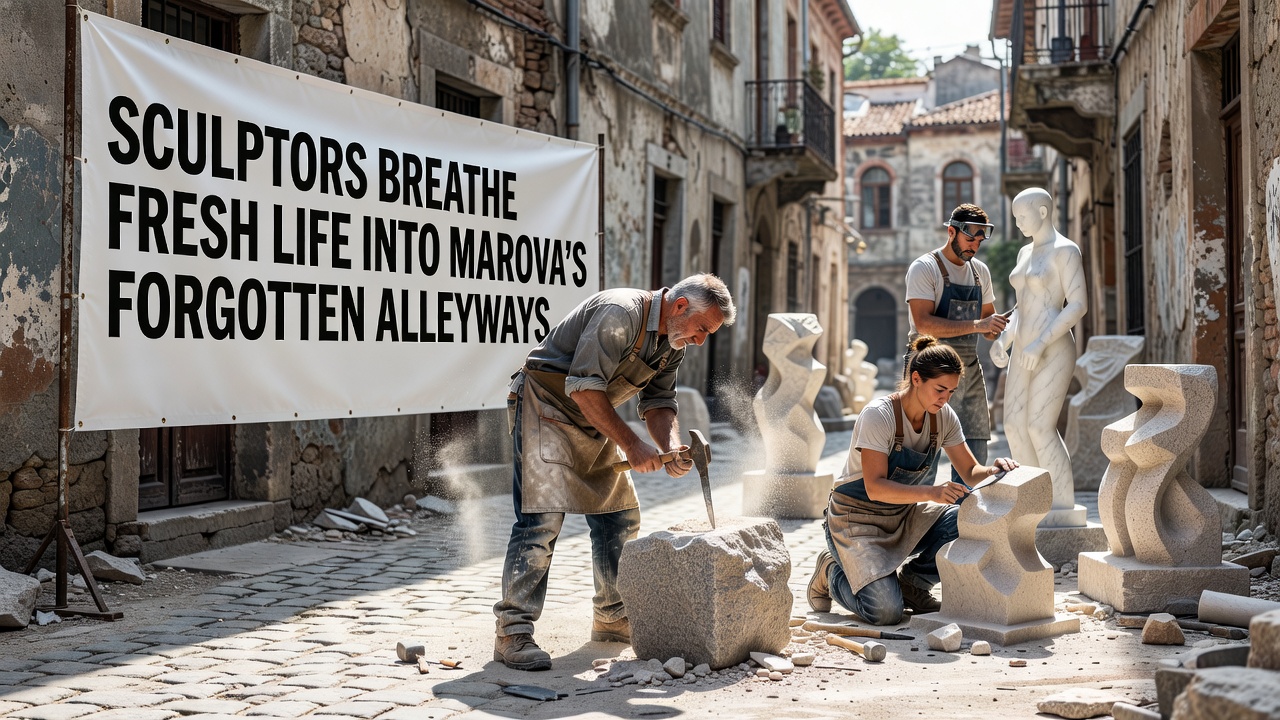
The narrow passages that once stood empty behind Marova's central market district have become sites of active creation, where sculptors work with stone, metal, and recycled materials to produce permanent installations, and local records show that more than thirty such works have been added since the project began in early 2024. These alleyways, many dating to the nineteenth century when the city served as a regional trade hub, remained largely unused after commercial traffic shifted to wider thoroughfares, yet community mapping efforts documented over two dozen forgotten routes that still connect residential blocks to the riverfront.
Origins of the Alleyway Revitalization
City planning documents indicate that the initiative started when a coalition of Marova's heritage preservation office and regional artists identified structural decay in several passages, prompting a call for sculptural interventions that could stabilize walls while adding visual interest. Data from the Marova Cultural Registry shows that initial funding came through a combination of municipal grants and private donations, totaling approximately 180,000 euros by mid-2025, while participation expanded when sculptors from neighboring regions responded to an open application process. Those who studied the alley layouts discovered that many passages retain original cobblestone paving and ironwork details, features that now serve as integrated elements in new compositions rather than obstacles to removal.
One installation completed in spring 2025 incorporates salvaged railway ties from the disused Marova rail spur, arranged in geometric patterns that echo the surrounding brick arches, and observers note that similar approaches appear in at least four additional sites completed during the following summer. The work continues into October 2026, when a coordinated unveiling of three new pieces is scheduled along the longest remaining alley that runs parallel to the old tannery district.
Artists and Techniques in Use
Sculptors selected for the program bring varied backgrounds, ranging from traditional stone carving practiced in the Apennine foothills to contemporary welding methods developed in northern European studios. Figures released by the Marova Artist Residency Program reveal that twelve international participants have contributed since 2024, each spending between four and eight weeks on site while collaborating with local apprentices. Techniques documented in project reports include direct carving into existing limestone walls, suspension of lightweight aluminum forms from overhead wires, and embedding of LED elements that activate only during evening hours to respect residential quiet zones.
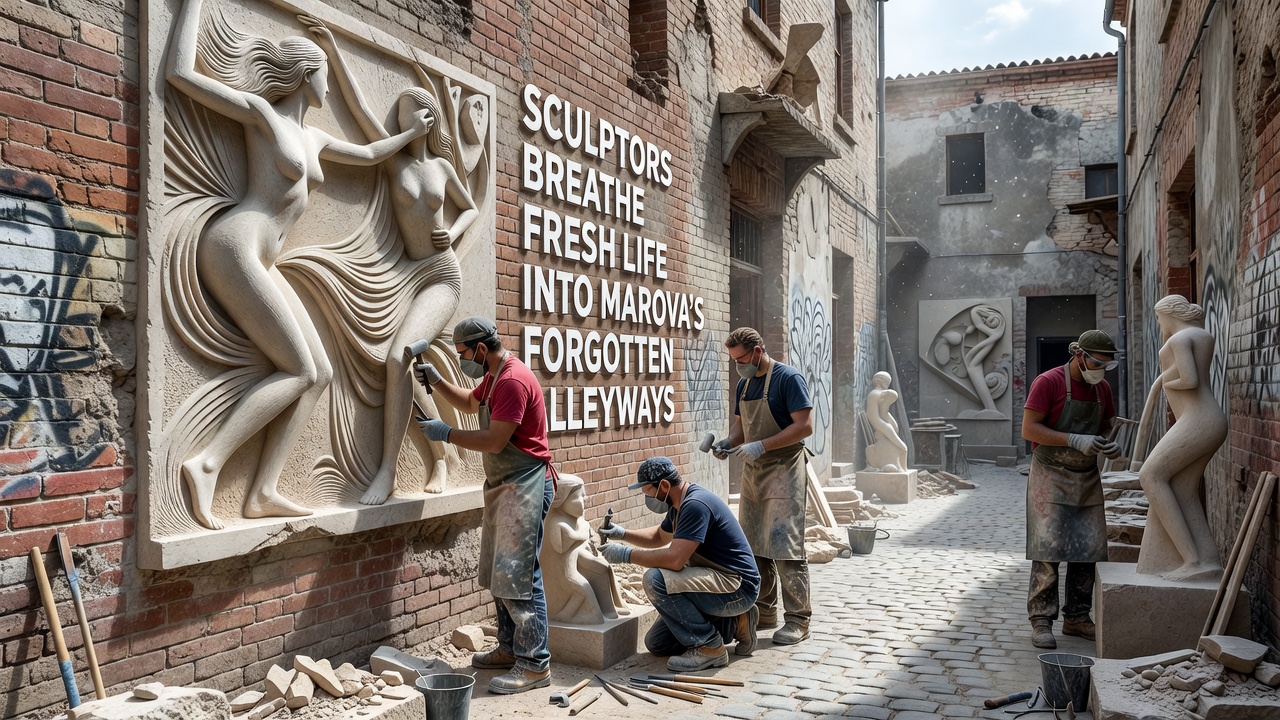
What's interesting is how these methods adapt to the confined dimensions, often no wider than three meters, forcing artists to work vertically or to create pieces that invite viewers to walk around them in sequence. A study conducted by the University of Bologna's Department of Visual Arts found that such spatial constraints encouraged greater use of reflective surfaces and modular components that can be assembled on location, reducing transport impact on the narrow streets.
Community Integration and Measured Outcomes
Local business ledgers indicate a measurable uptick in foot traffic through the affected alleyways once the first five sculptures were installed, with several cafes reporting extended hours to accommodate evening visitors. According to figures from the European Cultural Heritage Agency, similar alleyway projects in comparable historic districts have correlated with a 15 to 22 percent increase in pedestrian activity within two years, though Marova-specific data collection remains ongoing through municipal sensors. Residents who participated in guided tours organized by the Marova Tourism Board have described the changes as incremental rather than disruptive, noting that access for deliveries and emergency vehicles was preserved through careful placement of each piece.
Take one case where experts from the Canadian Conservation Institute consulted on material compatibility, recommending coatings that protect both new sculptures and original masonry from seasonal moisture cycles common to the region. That consultation produced guidelines now referenced in three additional Italian municipalities exploring comparable projects.
Upcoming Milestones for October 2026
Project timelines published by the Marova Arts Council list a public symposium scheduled for 15 October 2026, during which participating sculptors will present documentation of their processes alongside conservation assessments. The event will coincide with the lighting activation of the most recent installations, an element designed to extend usability of the alleyways into darker months without increasing overall energy consumption beyond baseline street lighting levels. Additional works slated for completion before the symposium include a suspended bronze relief series and a ground-level mosaic pathway that incorporates fragments of nineteenth-century signage recovered during preparatory excavation.
Conclusion
Records maintained by the Marova municipal archive confirm that the alleyway project has now entered its third phase, with five further passages identified for potential inclusion in 2027. The approach combines artistic production with practical maintenance, producing outcomes that city engineers continue to monitor for durability and public safety. As installations accumulate, the network of passages forms an expanding route that links previously isolated neighborhoods, and data collection efforts will determine whether similar methods can be applied elsewhere in the historic core.